In 1941, the Penny Pines program (now Plant-a-Tree) was begun in California. Arizona participated in this program from its inception.
In 1944, the New Jersey Council of Garden Clubs began the Blue Star Memorial Marker program by planting 8,000 dogwood trees as a living memorial to veterans of WWII.
In 1945, the National Council of State Garden Clubs (now NGC) adopted the Blue Star Memorial Marker program, and AFGC began participating.
In 1956, AFGC began its scholarship program with grants of $1,500 given to three students attending each of Arizona’s three state universities.
In the 1970s, regional and national awards in speech and essay contests were begun. Poetry and poster contests were also begun to support our youth.
In 1977, Arizona’s Operation Wildflower, in cooperation with ADOT, helped plant wildflowers along Arizona’s highways. The 50th anniversary project, Trees for Travelers, provided benches and trees at Arizona rest areas.
In 1983, a rose garden was planted at the State Hospital in Phoenix.
From 1991–2001, AFGC spearheaded a drive to name a state butterfly. In 2001, the governor signed a bill to name the Two-Tailed Swallowtail as Arizona’s state butterfly.
In 1993, Arizona became involved in the National PETALS program where Shell Oil Company and NGC joined together to fund civic and environmental projects.
In 1994, a tribute garden was planted at the State Capitol in Phoenix.
In 1998, with the opening of Kartchner Caverns, AFGC created a hummingbird garden at the site.
In 1999, garden clubs began donating trees and landscaping to new Habitat for Humanity homes.
Over the decades, the Arizona Federation of Garden Clubs has developed strong projects supporting conservation, beautification, and education.
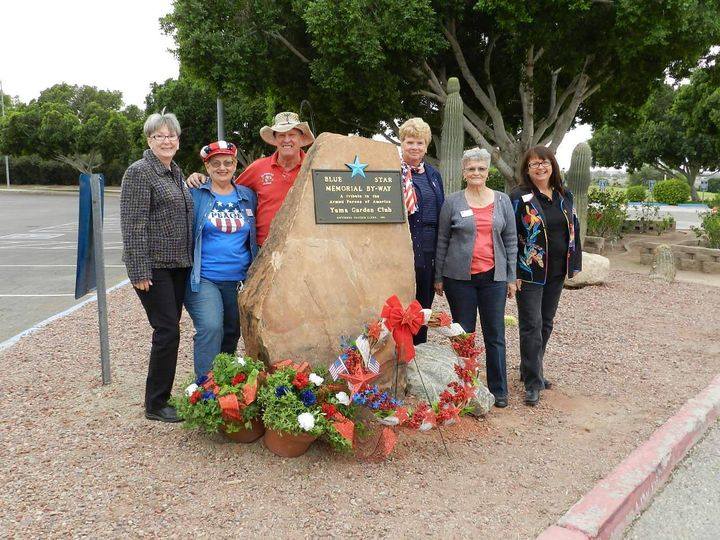
Blue Star Markers have been dedicated throughout America’s cities by NGC garden clubs to honor our armed forces.
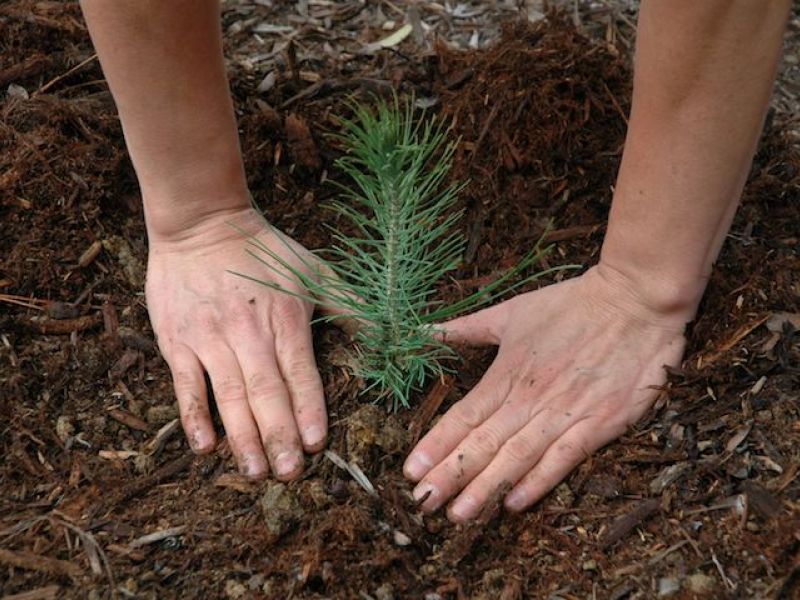
Penny Pines, now Plant-a-Tree, is an NGC program that has planted millions of trees in our burned national forests.