When you think of planting a citrus tree, Buddha’s Hand is probably not what comes to mind. In fact, many people have never heard of this unusual citrus, but it is an ancient type of citron originally grown in India thousands of years ago. Citron is one of four citrus varieties that also include pomelo, papeda and mandarin from which other citrus have been developed.
In the U.S., Buddha’s Hand, Citrus medica var. sarcodactylis, is considered one variety. In China, there are at least a dozen subvarieties differing in shape and color of the fruit or the tree’s form for bonsai.
Buddhist monks carried Buddha’s Hand from the lower Himalayas of India to China during the fourth century A.D. Over time, the fruit became a symbol of good luck and happiness in China. Even today, Chinese jade and ivory carvings depicting the fruit are often worn for good luck. Its aroma is a mixture of tangerine, lavender and lemon, and its fruit is often placed in homes and on temple altars to perfume the air and ensure peace and tranquility.
Unlike other citrus, Buddha’s Hand, has no juice or pulp. It is prized for its aroma and the lemony flavor of its rind. The outer rind is grated and added to all types of dishes, from ice cream to seafood. Scented sugars, salts and infused liquors are created with the solid interior of the fruit, called albedo.
Like other citrus, Buddha’s Hand grows in warm regions of Arizona and can be planted in spring. When immature, the fruit is green and the fruit’s sections, or “fingers”, are closed. As the fruit matures, it turns bright yellow and the “fingers” open and spread apart. The fruit is between six to twelve inches long, resembling an outstretched hand. It ripens from late fall to early winter and will keep several weeks in a cool, dry place.
The tree grows 6-10 feet tall and can be grown in a large container or in the ground. You do not need a second tree for pollination. It is frost sensitive and grows well in zones 10-11. If the temperature drops below freezing, it is best to cover the tree. Like other citrus, fruit is produced three to five years after planting. Plant in full sun and in a location that is protected from strong winds.
Being a specialty citrus, few nurseries carry Buddha’s Hand, and they cannot be ordered from out-of-state. However, Moon Valley Nurseries in Phoenix and Spadefoot Nursery in Tucson sell them. Buddha’s Hand is an interesting citrus that is definitely a great conversation piece.
Karen Bowen, Blog Manager
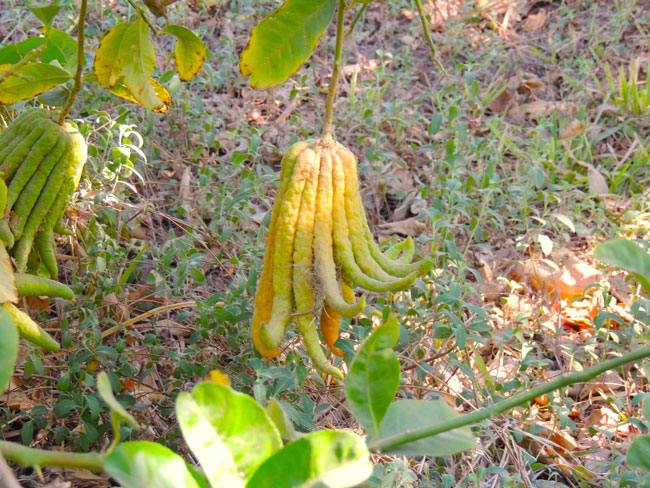
Buddha’s Hand has finger-like projections that make it an unusual-looking citrus.
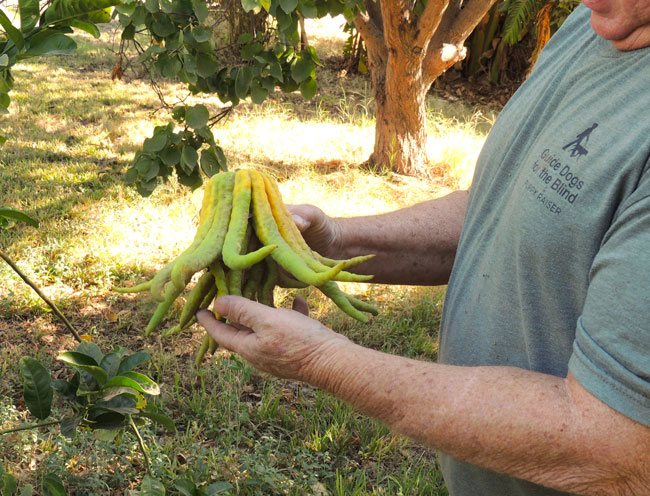
Buddha’s Hand is valued for its aroma. Unlike other citrus, it has no juice.