November is Native American Indian Heritage Month, a time to honor and celebrate the cultures, traditions, histories and contributions of our 574 American Indian tribes. President Ronald Reagan established an “American Indian Day” in 1983, and Congress created the first official “American Indian Week” in 1986.
During his Proclamation, President Reagan stated, “American Indians make contributions in every area of endeavor. American life, literature and all our arts draw upon Indian themes and wisdom. Countless American Indians have served in our Armed Forces and have fought valiantly for our country.”
A month-long celebration honoring American Indians began in 1990 when President George H. Bush declared the month of November “Native American Indian Heritage Month”. Each November, communities, schools and institutions hold events and display exhibits showcasing the special contributions Native American tribes and tribal members have made to our country. Tribes hold pow wows where elders tell stories from their past, traditional dances are held, and tribal costumes and arts and crafts are showcased.
Native plants grown for food or used for medicinal purposes by American Indian tribes and other ancient people of the southwest are preserved by Native Seeds/SEARCH, a non-profit organization based in Tucson. They collect heirloom seeds and offer some varieties for sale to the public online and store all seed varieties in their Tucson seed bank. The seeds are open pollinated, not hybrids, and grow true to the plant.
Seeds of heirloom plants are grown at their Conservation Farm in Patagonia, Arizona. Over 2,000 plants once used for food, fiber or dyes are preserved for future generations. Their catalog (nativeseeds.org) offers a wide variety of heirloom seeds for sale that include varieties of beans, amaranth, beets, corn, cabbage, carrots, devil’s claw, gourds and much more.
An example of an heirloom plant offered by Native Seeds/SEARCH is the Tohono O’odham (Papago) pink bean. For centuries, this bean was an important part of the Tohono O’odham’s diet. Planted during monsoon rains, it was harvested in early spring or late fall and was a protein-rich bean used in one of their staple foods, chili beans.
Over the centuries, Native American Indians in the southwest bred their crops to withstand the region’s arid conditions, with each plant serving a special purpose. Seed preservation of heirloom seeds is at the heart of America’s seed security. By purchasing heirloom seeds and sharing them with fellow gardeners, you are increasing the number of plant varieties grown and are increasing America’s crop diversity.
Gardeners wanting to grow southwest heirloom plants can go online to nativeseeds.org to purchase seeds. A detailed description of each plant and where it grows best is listed in their online catalog. Growing Native American Indian plants would be a fun activity for a garden club to do with a youth group. The children could also read books about various American Indian tribes and create some of their arts and crafts.
November is a time to celebrate Native American Indians’ traditions, languages, stories, art, food and other cultural treasures. Just as this month is a special time to help preserve tribal traditions and histories for future generations, Native Seeds/SEARCH helps preserve southwest tribe’s heirloom plants for future generations.
By Karen Bowen, AFGC Blog Manager
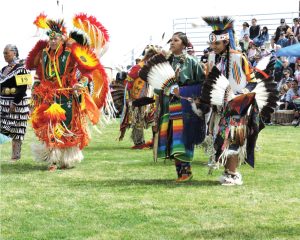
Photo 1 Karen Bowen
The annual pow wow in Winterhaven, CA offers tribal members an opportunity to show the public their traditional outfits, dances, and arts and crafts.
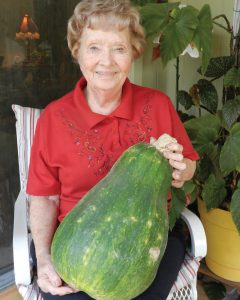
Photo 2 Karen Bowen
Dema Lee, former garden club member, holds a Tohono O’odham squash she grew. This is one of many of the tribe’s vegetables grown and seeds saved by Native Seeds/SEARCH.
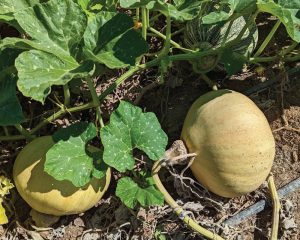
Photo 3 Native Seeds/SEARCH
Another Tohono O’odham squash variety grown by Native Seeds/SEARCH based in Tucson.
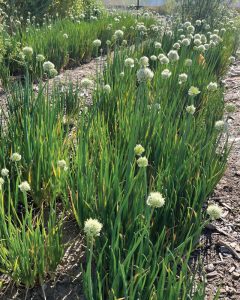
Photo 4 Native Seeds/SEARCH
An online Native Seeds/SEARCH catalog offers heirloom vegetable seeds such as these I’itoi onions grown by the Tohono O’odham tribe for centuries.