Have you ever looked closely at the National Garden Clubs’ logo? It has a green background with a silhouette of white flowers. What variety are those flowers? They are columbine flowers. NGC chose a columbine for its logo “as a symbol of beauty, perseverance and the joy of gardening embodying the National Garden Clubs’ commitment to beautifying and preserving the environment for future generations.”
A columbine, Aquilegia spp., has spurred flowers on stems reaching above its mounding foliage. Each flower has a buttercup shape that rests inside an outer set of petals, called spurs, which point backwards. From zones 3 to 8, columbines grow as perennials and are recognized by gardeners worldwide. Its flowers are in every color of the rainbow, with each variety having a unique color or bi-color. Plants form a mounding clump of blue-green foliage that emerges each spring. The delicate beauty of the flowers is opposite to the tough plant that thrives in a variety of soils, conditions and planting zones. Most varieties are 1-3 feet tall and wide. Columbines should be pruned by half their size once blooming is over in summer to maintain correct form.
Native to Europe, Asia and North America, columbines are recognized worldwide. Two varieties native to North America are Aguilegia canadensis, eastern red columbine, that grows east of the Mississippi River, and Aguilegia formosa, western red columbine, that grows along the west coast from Baja, California to the Yukon in Alaska. Columbines grow mostly in wooded areas with dappled sunshine and moist soil.
Plant a columbine in partial shade in hotter zones and full sun in cooler zones using well-draining soil. If planting a bare-root rhizome, dig a hole deep enough for the roots to easily grow downwards. Plant the rhizome about one inch below the soil. Young plants need continual moist soil to establish. Be careful where you plant a columbine since it is toxic to humans.
At the end of its growing season in fall, cut the plant’s stalks to the ground. Scatter a light layer of mulch or leaves over the plant to protect it during winter. In spring, remove the mulch or leaves, and the plant will regrow. You might also find new plants growing from seeds that dropped to the ground.
New plants may not bloom the first year they are planted unless you plant them in fall so they bloom the following spring. Blooms last around four weeks, starting mid-summer. Most varieties have flowers with little scent. However, Rocky Mountain Columbine, Aquilegia caerulea, has a sweet smell.
A columbine lives 2-4 years but will live longer if divided. Once every 2-3 years, divide the plant in spring. Its deep roots make it difficult to dig up. Once dug up, lift the plant from its hole
and use a sharp knife to divide it into sections. Place one section back in the original hole and backfill. Place the other sections in new holes about a foot apart.
Columbines reward you with beautiful blooms each spring and are easy to care for. National Garden Clubs picked the perfect plant for its logo, since a columbine is both hardy and beautiful.
By Karen Bowen, Blog Manager

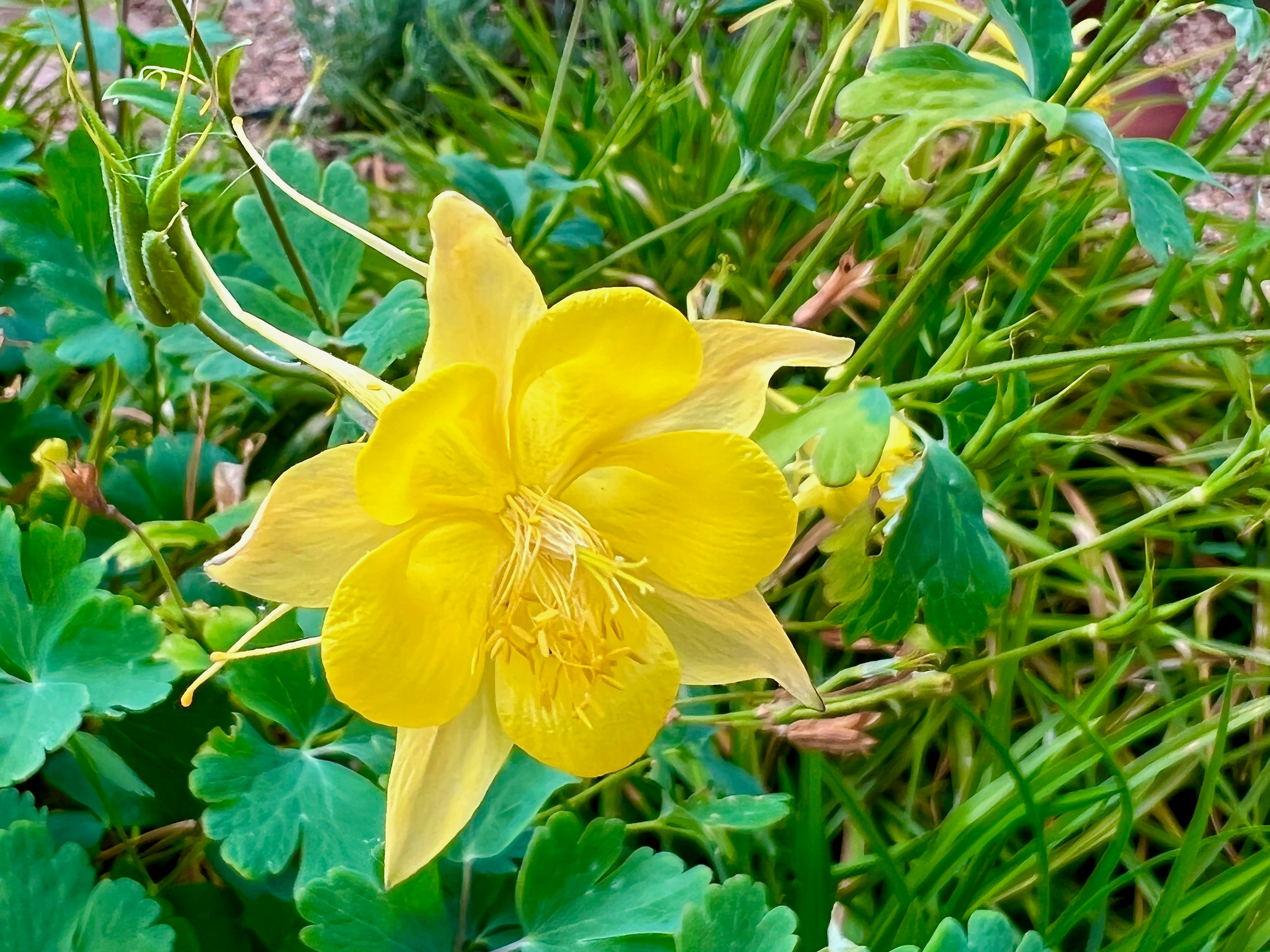
Yellow columbine
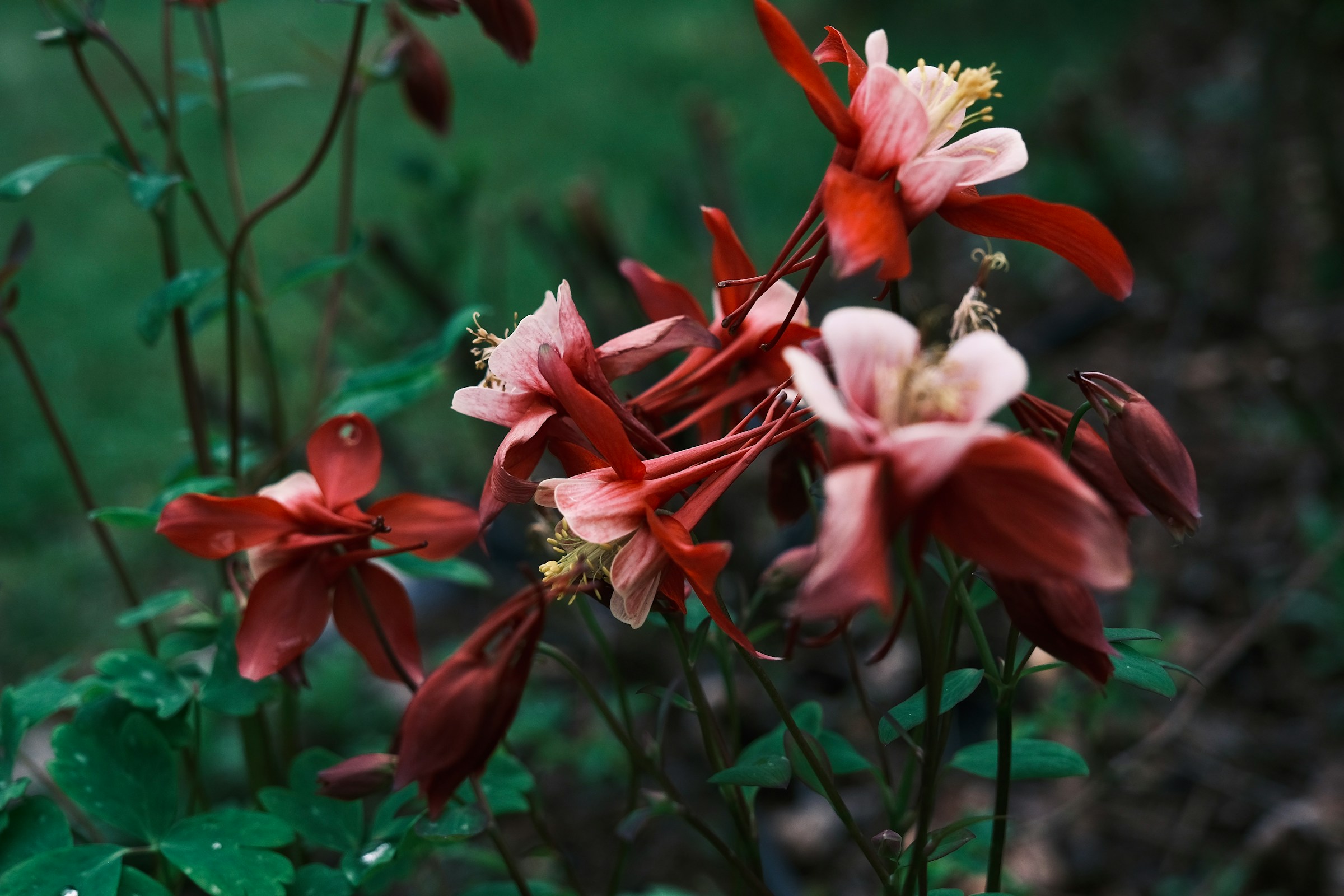
Columbine flowers come in all shades of red, pink, yellow, white, purple and blue.
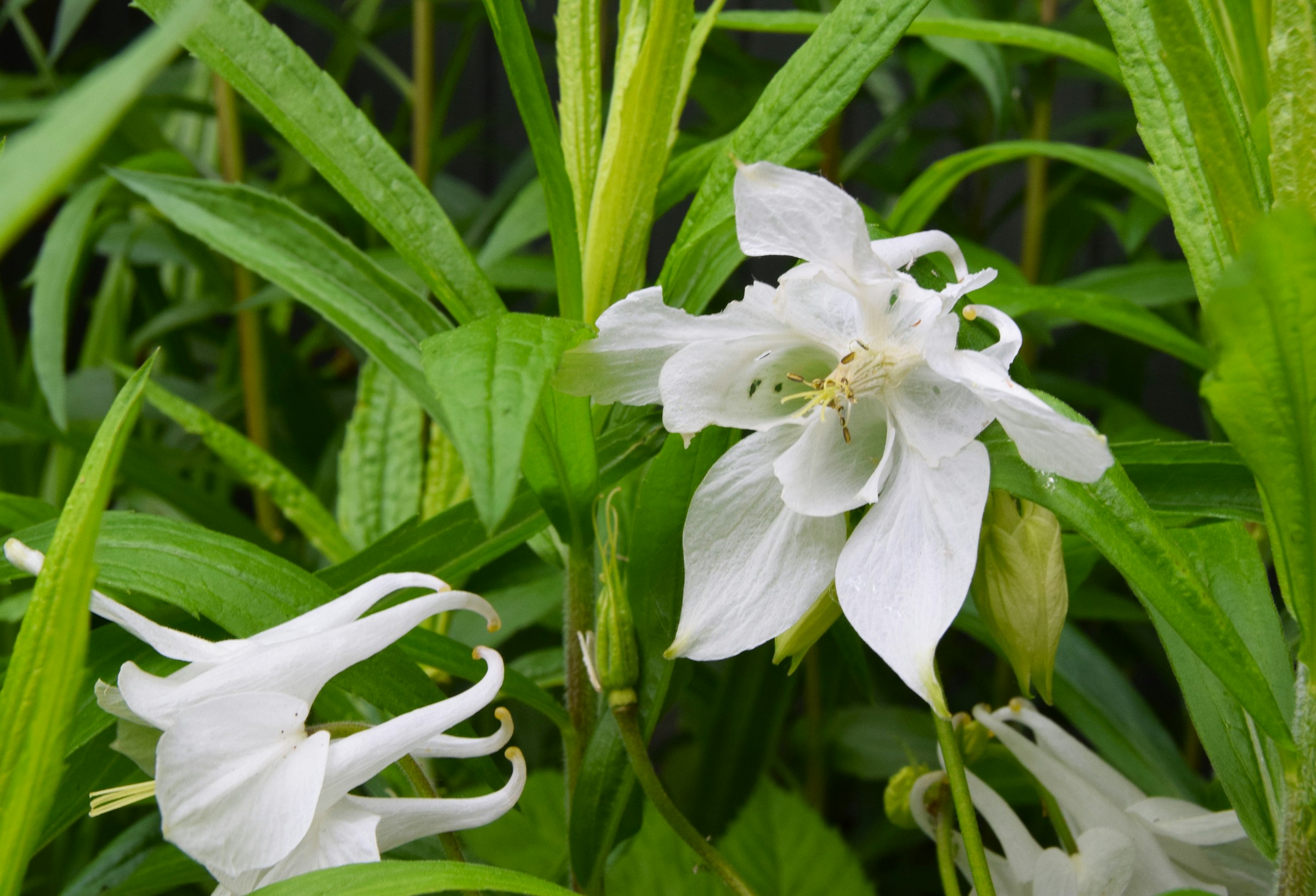
Columbine grows in zones 3-8.